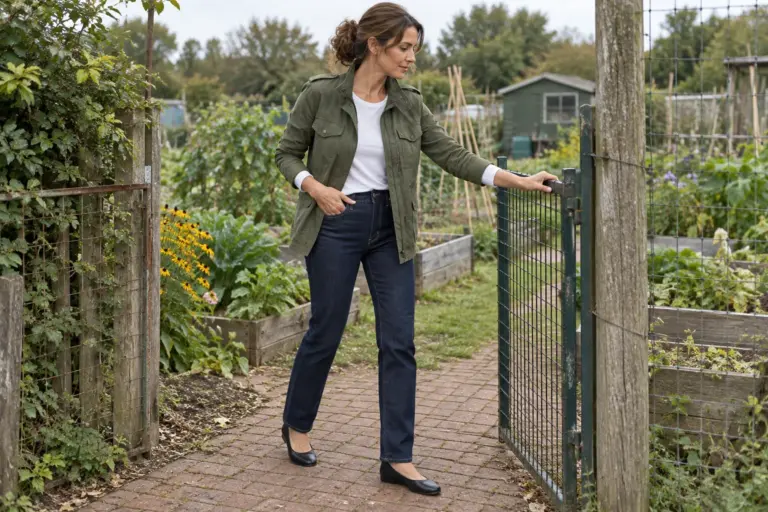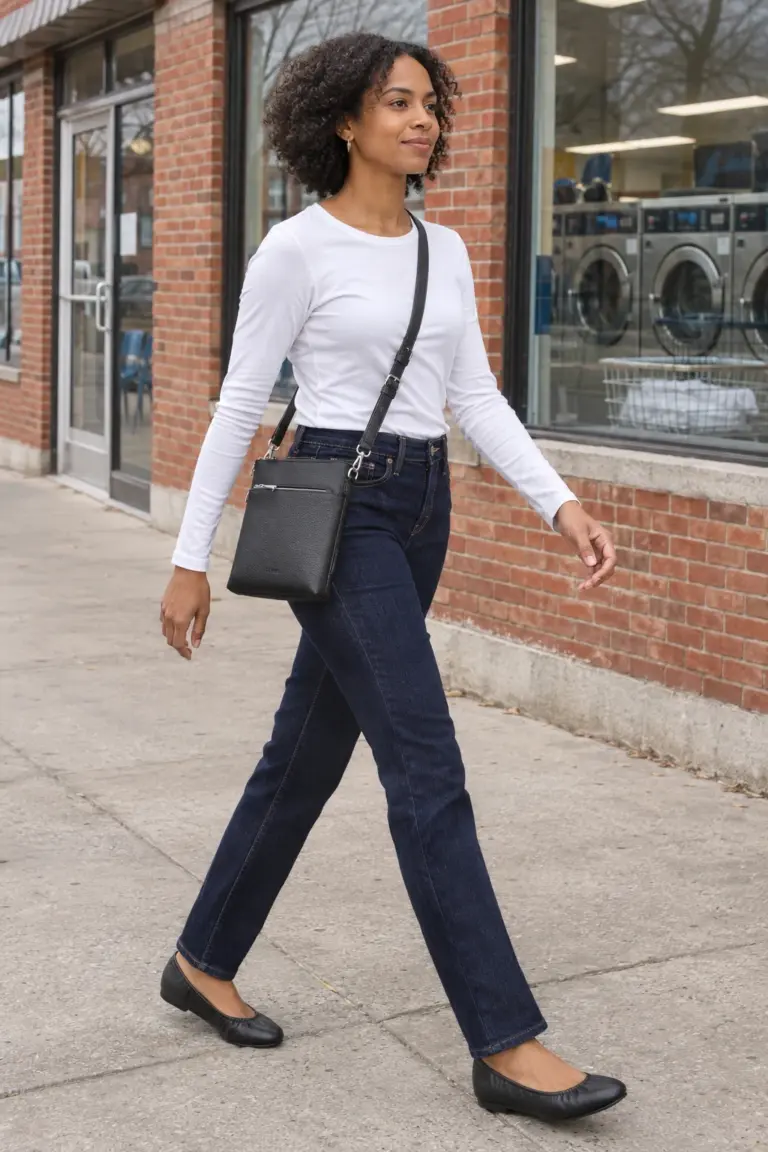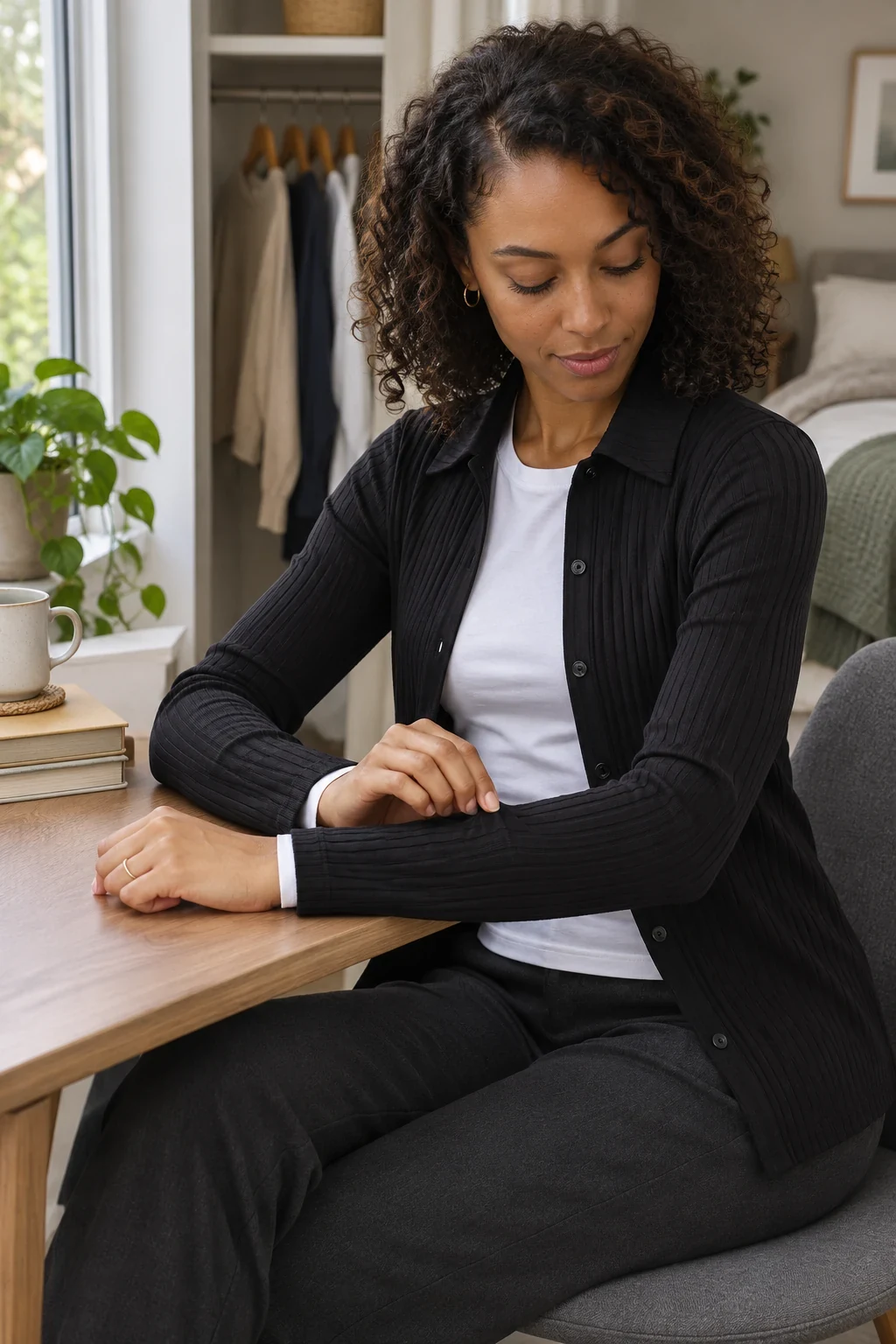
Before buying another wardrobe piece, test three complete outfits for plans already in your calendar. Record what works and the exact point where each combination breaks down. The next useful purchase is easier to identify when it answers a repeated need you can name.
Outfit scenes are AI-generated styling illustrations. Product cards show retailer photographs.
Choose Three Real Situations
Use a casual day, an appointment and a dinner or social outing you expect soon. Adjust those situations to your own week. An imaginary wardrobe for a lifestyle you rarely lead gives you less useful information than clothes for activities you actually do.
Write down the main garment, layer, shoes and bag for each situation. Include underwear or hosiery that changes how the clothes sit. Bring those pieces together before deciding that an outfit is complete.
Try Each Outfit from Start to Finish
Put on the first combination and move as you expect to move that day. Sit, walk, bend your arms and carry the bag with the intended contents. Look at the hem and neckline in daylight. Repeat for the other two outfits.
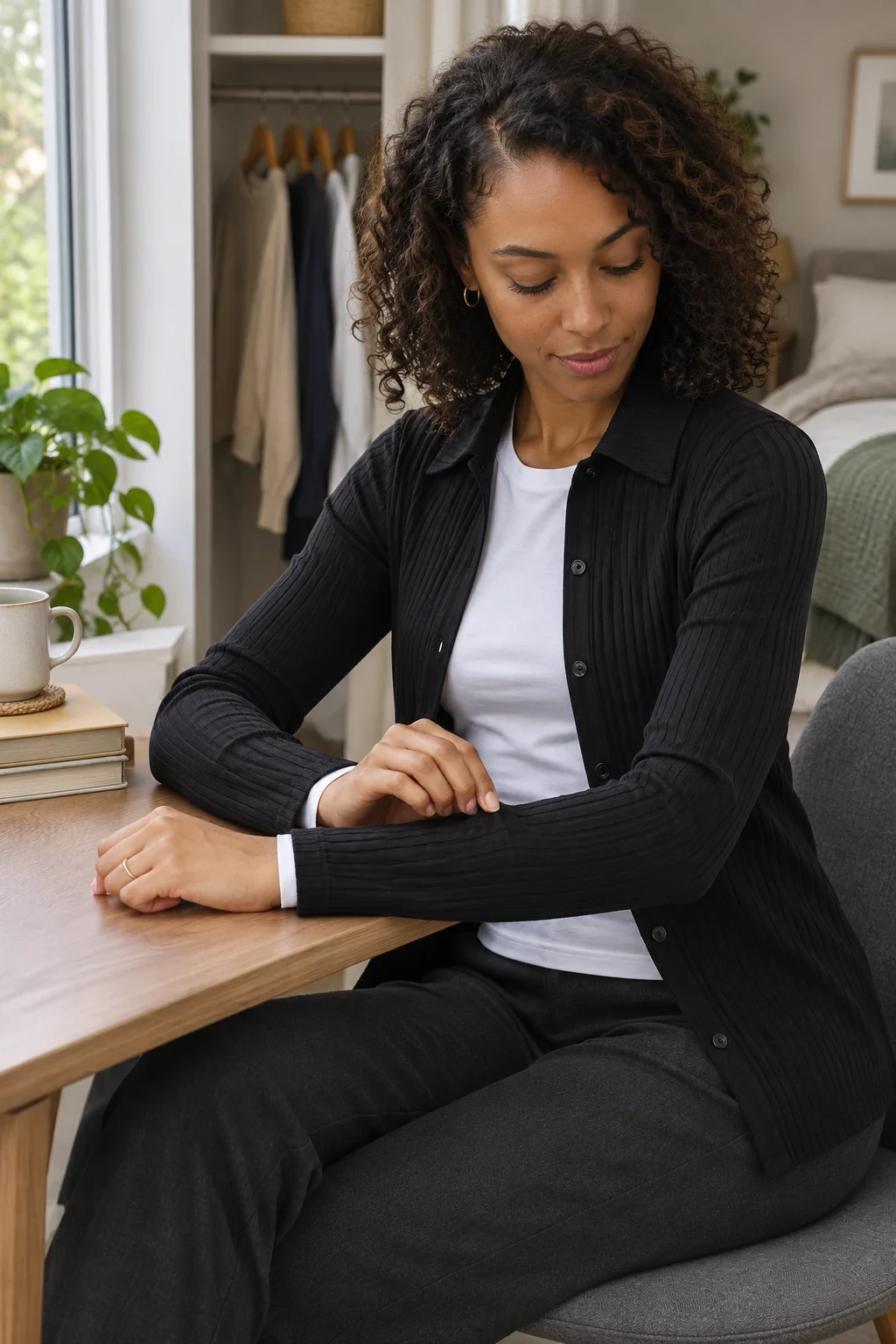
Record a specific issue rather than a general dislike. A layer may have too little sleeve room, a bag may not close over your essentials, or a top may not give the coverage you want. Specific observations help you choose a suitable change.
Separate a Missing Item from a Different Combination
If the cardigan feels crowded over a long-sleeve tee, try it with a lighter base you already own. If the small bag is full, remove things you do not need for that outing and test it again. If the outfit still fails its practical job, record the remaining gap.
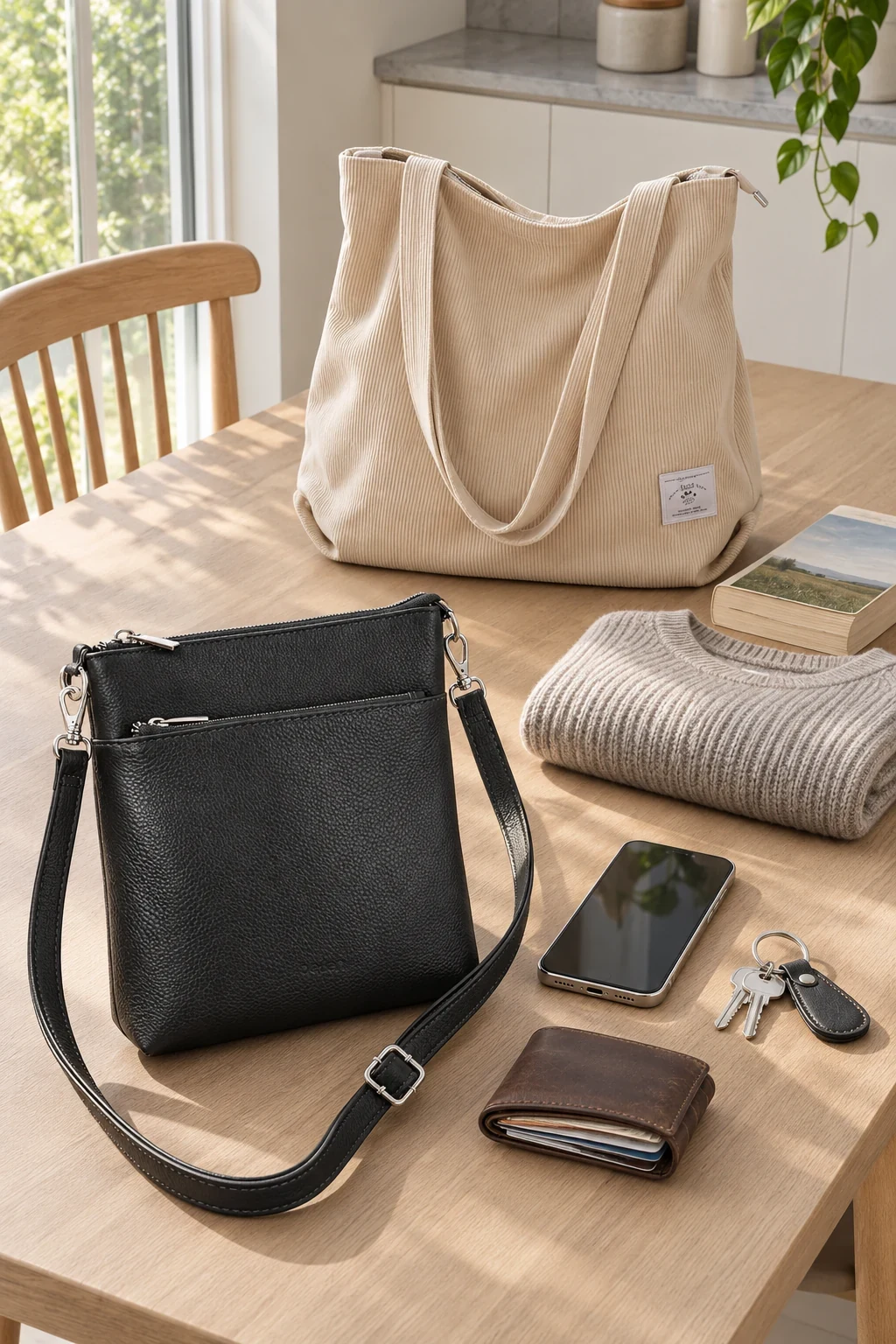
For example, a compact crossbody and a larger tote serve different carrying needs. Buying another small crossbody will not solve a day that requires a book and extra layer. The two sample bags have very different listed exterior dimensions, which makes their roles worth comparing before selecting one.
Write a Short Purchase Brief
| Question | Useful answer to record |
|---|---|
| What task is missing? | The garment or bag’s job in the outing |
| Which outfits need it? | The combinations you actually tried |
| What must fit? | Your body, intended layers or carried contents |
| What care suits you? | A cleaning routine you can maintain |
| What can already substitute? | Existing pieces you have tested |
Use that brief to evaluate a specific product. Check its selected variant, measurements and care information. For a layer, compare it with the garment you will wear underneath. For a bag, test the contents against its opening and usable space when you have the item.
Buy for the Resolved Role
You may discover that a hem adjustment or different shoe completes the outfits without another purchase. You may also find a repeated gap that justifies a new piece. Keep the successful combinations and the brief together so future shopping begins with a clear use.
The sample products in this guide are options for particular roles. Choose among them only after deciding which role your own wardrobe needs filled. That makes a product link the last step in a usable selection process.
As an Amazon Associate I earn from qualifying purchases. Confirm the selected variant and current specifications on the retailer page.