A jacket earns a place in a small wardrobe when it completes outfits you already want to wear. An army-green utility jacket and a navy blazer can both go over a white tee and jeans, yet they give that base different edges, colors and levels of visible detail. Trying each again with a shirt and wide trousers makes the choice more useful than asking which jacket looks better by itself.
Here the two candidates are chouyatou’s Army Green stand-collar utility jacket and an Amazon Essentials Navy single-breasted blazer. The first has a zip front, shoulder epaulets, an inner waist drawstring and four flap pockets; the second has notched lapels, one front button and a longer, fully lined shape. These are different wardrobe roles, not versions of the same garment.
 Utility DenimUtility jacket open over white tee tucked into indigo jeans; straight hem and four pocket positions visible.
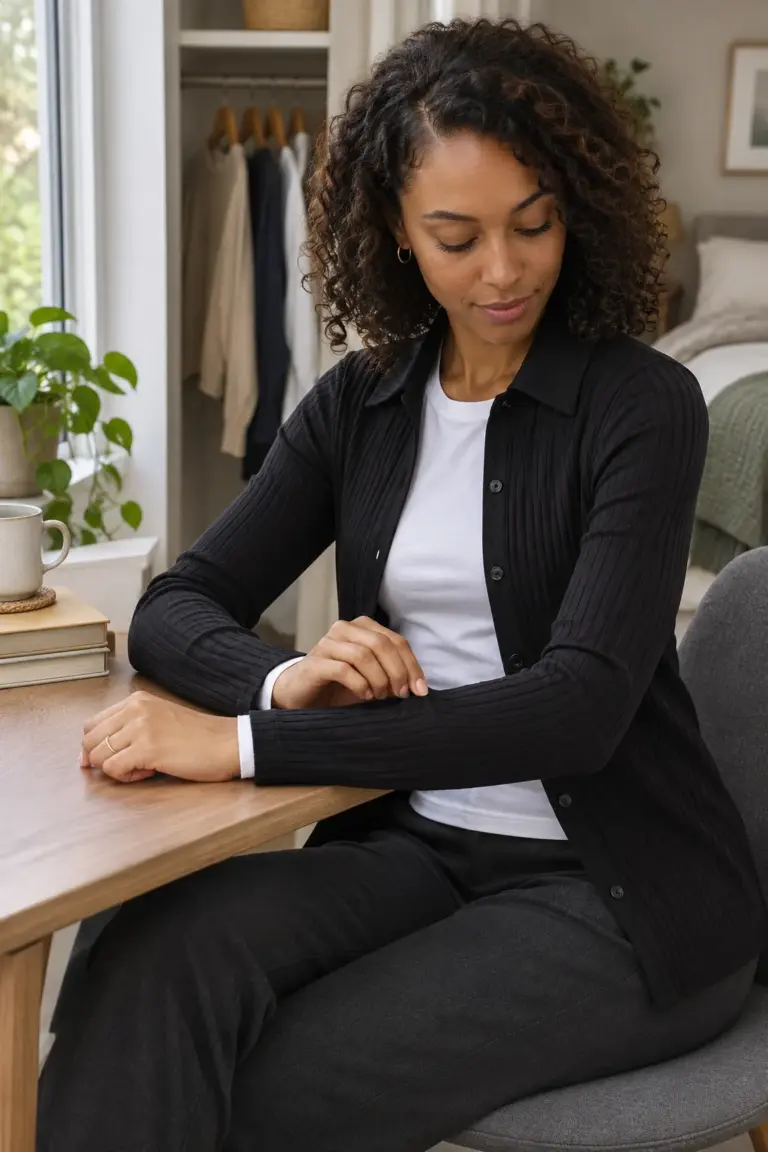
 Blazer DenimNavy blazer open over same white tee and indigo jeans; no bag.
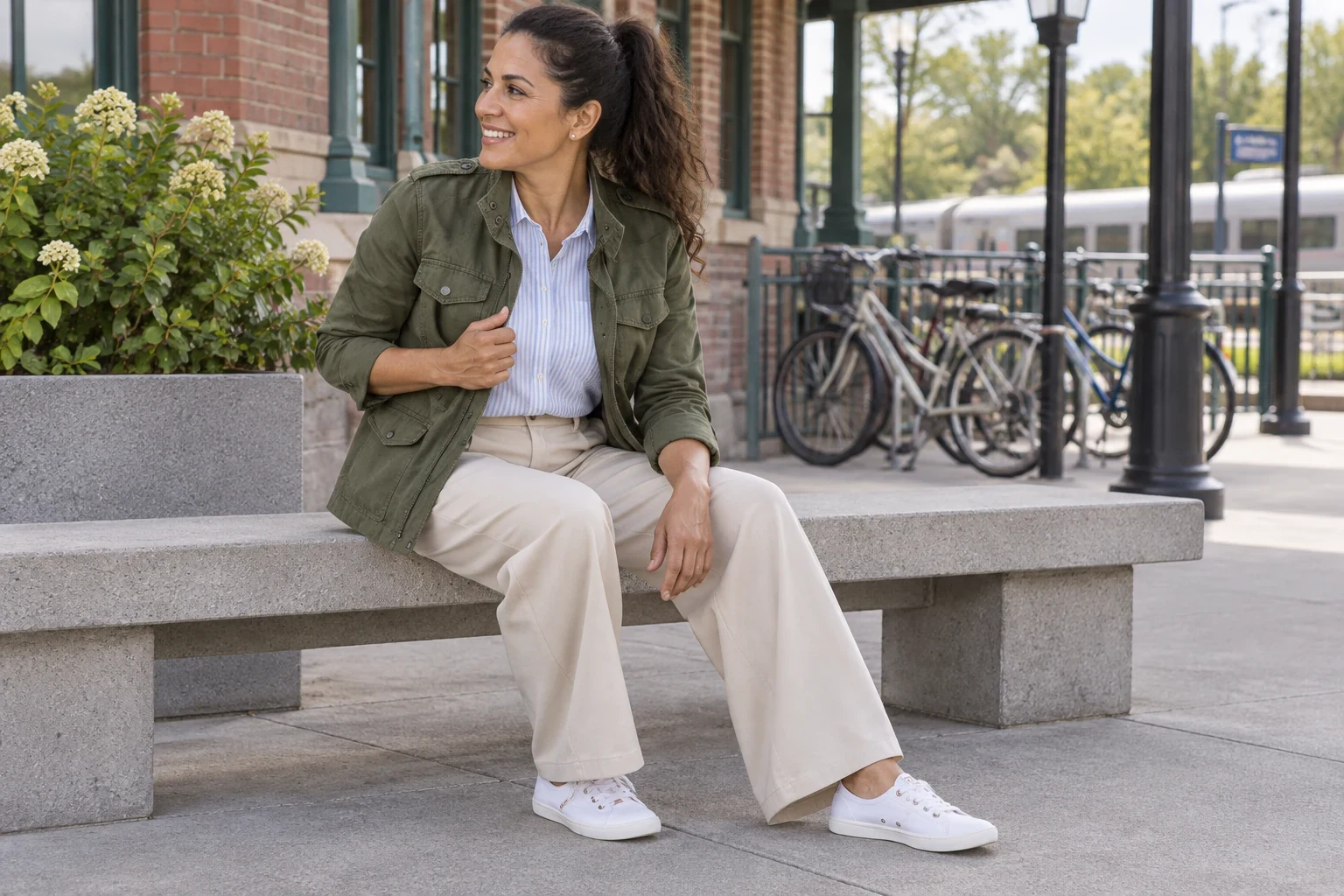 Utility WideOpen utility jacket over buttoned striped shirt with a small front tuck, beige wide trousers and white canvas slip-ons.
 Blazer WideOpen navy blazer over same striped shirt and beige wide trousers, white decorative-lace canvas slip-ons.
Outfit scenes are AI-generated styling illustrations. Product cards use retailer photographs.
Start with the Outfits, Before Comparing Jackets
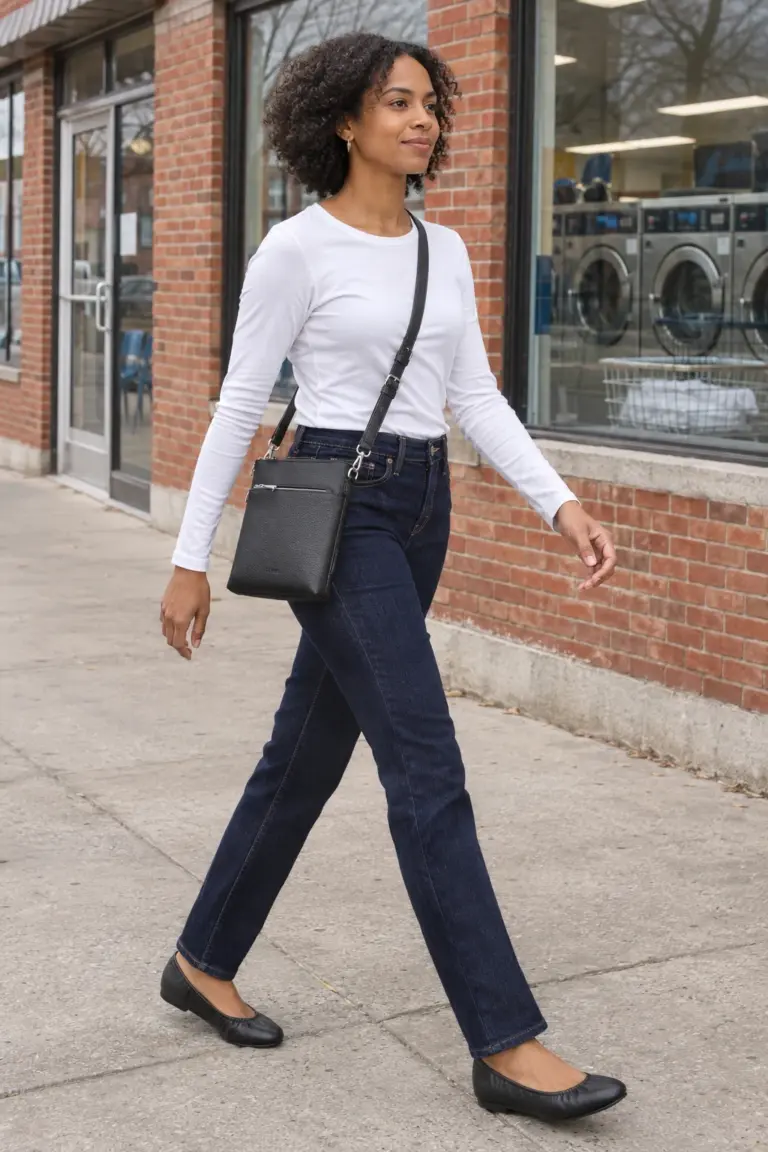
Choose two complete bases from your own closet. For example, the first here is a white long-sleeve tee with dark indigo straight jeans and black ballet flats. The second is a striped cotton shirt with beige wide-leg trousers and white canvas slip-ons. The bases differ enough to reveal whether one candidate merely repeats an existing jacket’s job.
Try each candidate with both bases. For each combination, ask whether the outer hem, collar and sleeves sit as you want; whether the outfit remains useful with the jacket open; and whether the layer meets an actual need. An outfit you would not wear without buying several additional pieces is weaker evidence of a wardrobe gap than one already nearly complete.
Compare the four outfits as complete combinations, paying attention to the outer hem and collar with each base.
Utility Jacket Over the White-tee and Denim Base
Leave the army-green jacket open over the tucked white tee. The light center stays visible between two green front panels, while the indigo jeans continue below a relatively straight outer hem. The flap pockets and shoulder details make the jacket itself the most articulated part of this otherwise plain base.
This is useful if your existing tee-and-jeans outfits feel complete in shape but you want a more casual outer layer with visible structure. It is less useful if you dislike chest pockets or want a jacket whose front remains visually quiet. Those are concrete preferences to notice before adding it to a small wardrobe.
The listing describes a cotton outer and polyester lining. Army green and a military-style collar do not make this a rain layer, and the outfit does not establish protection from weather. The seller also distinguishes body and garment measurements in its size-chart guidance. Compare both with the layer you intend to wear underneath rather than assuming a familiar letter size will leave the right room.
The dark jeans here are Levi’s 724 in Cast Shadows, with a high rise and a straight leg that is slim through the hip and thigh. A different existing jean may work equally well, but a much wider leg will change the overall outline. Begin with your usual pair so you can recognize what the jacket actually changes.
Navy Blazer Over the Same Tee and Jeans
The navy blazer gives the white center a different frame. Its lapels create diagonal lines at the neckline, and its longer front carries farther down the hip than the short line of the tucked tee. Navy stays close to the dark indigo, so the outer layer reads more through its construction than a large color difference.
This is the stronger candidate when you specifically want lapels and a longer tailored outline around casual clothes. It need not mean turning the base into a suit. Keeping the plain tee, jeans and flats makes it possible to see what the blazer adds without also changing every other item.
The selected blazer is listed as fully lined, with a polyester-viscose-elastane fabric blend and dry-clean-only care. Its stated length is 27½ inches from the side neck on US size 6. Keep that size condition attached to the number: another size and your own proportions can produce a different hem position.
Try reaching forward and bending the elbows while wearing the intended tee underneath. Look at the shoulder and upper sleeve, not just the front button. If you want to close the blazer, also check the front in that state. A pleasing open-front photograph cannot establish that the chosen size will button comfortably on you.
The white tee used here is a regular-fit cotton-modal-elastane style, rather than a bulky sweatshirt. If your actual base is thicker, that changes the layering check. Test the clothes you intend to use, not a thinner substitute selected only to make the jacket fit.
Keep from the earlier looks · paid links
Utility Jacket Over a Striped Shirt and Wide Trousers
The second base adds a collar, a narrow pattern and a broader leg. Keep the striped shirt buttoned with a small front tuck, then wear the utility jacket open. The green outer panels break up some of the stripes, while the beige trousers provide a large, quieter area below.
Notice the two collars together. A stand collar outside a shirt collar can feel quite different from a jacket over a crewneck. Arrange the shirt collar as you would actually wear it, then look from the side. If the neck area feels too busy or stiff for your taste, that matters even when the colors coordinate.
The trousers have front pleats, a button-and-zip closure and an elasticized back waistband. The shirt is cotton poplin with a shirttail hem. A small front tuck exposes the pleats, but it leaves longer side and back fabric inside the open jacket. Check that those tails sit deliberately rather than bunching around the hip pockets.
White BOBS B Cute canvas slip-ons keep this version casual. Their tied-off laces are decorative; they are not a conventional lace-up shoe used here to prove a more adjustable fit. The light shoe also creates a different bottom edge from the black flats in the denim base.
Navy Blazer Over the Shirt-and-trouser Base
With the blazer, the striped collar sits inside notched lapels instead of a stand collar. The navy jacket and beige trousers create a clearer upper/lower division, while the white shoes connect back to the light stripes. The individual pieces remain casual enough to use separately; matching colors do not require purchasing a complete coordinated set.
Look at the outer hem against the wide leg. A longer blazer over wide trousers produces more fabric through the middle and lower half than the tee-and-straight-jeans combination. Keep the front waist visible with a modest tuck if you want a clearer break, or try the shirt fully outside if you prefer a longer line. Judge the result as a whole rather than treating a visible waist as a universal requirement.
This base also tests how often you would use the blazer in a collared outfit. If most of your actual clothes are tees and narrow jeans, the first base may deserve more weight in the decision. If you regularly wear shirts and trousers, this second combination may be the more revealing one.
Keep from the earlier looks · paid links
Make the Purchase Decision from the Useful Combinations
Write down which of the four combinations you would genuinely repeat. A jacket that works with both of your preferred bases may fill a broader role; a jacket that works with only one can still be worthwhile if that one outfit answers a frequent need. Do not let a numerical score outweigh an outfit you dislike wearing.
Also count what is already covered. If another jacket provides the same casual pocketed outline, the utility candidate may duplicate it. If your existing blazer already gives you the lapels and longer navy layer you want, another similar blazer may add less than a different garment. “Both coordinate” does not automatically mean “buy both.”
Finally, settle the practical conditions independently of the styling. The blazer specifies dry cleaning. The utility listing’s care field contains both “Machine Wash” and “Hand Wash Only,” so confirm the actual garment label or ask the seller before relying on either instruction. A contradictory listing is not a basis for calling it the easy-care option.
Use your preferred complete outfits, actual layering room and acceptable care routine together. That gives the next purchase a specific job, instead of leaving a good-looking jacket to create several more shopping requirements.