
Use navy, white, black and denim as four recognizable roles in a small wardrobe. Navy can supply a main garment or outer layer, white can create a light center, black can connect bottoms and accessories, and indigo denim can carry the blue into casual outfits. Start with pieces you own and test those relationships before choosing more colors.
Outfit scenes are AI-generated styling illustrations. Product cards show retailer photographs.
Give Each Color a Job
Start with a white long-sleeve tee, black cropped jeans, a navy blazer and black flats. The doorway example shows the white center between navy lapels and a black waistband. The black bag repeats the trousers and shoes. Try the blazer open first so those separate areas remain visible.

Blue Stripes with Indigo
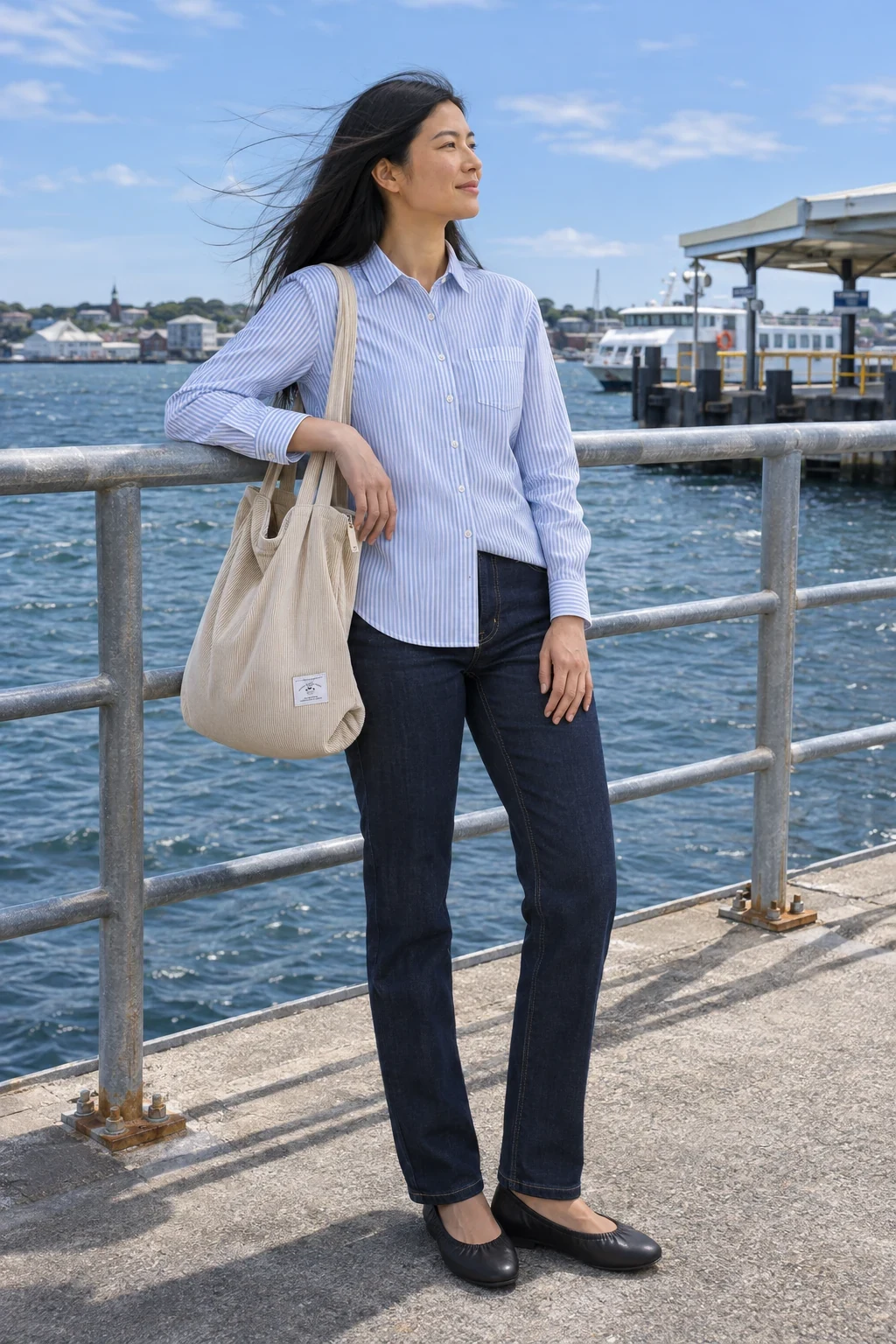
The harbor example uses the blue-and-white shirt with indigo jeans and a cream tote. The shirt spreads blue and white across the upper half, while the tote creates a larger light area at the side. Black flats supply a small dark finish. Compare that distribution with the white-center outfit before deciding which balance you prefer.
Let Navy Lead
The navy dress makes one color the largest area, with the black bag and flats as smaller accents. The gallery view shows the dress moving as a continuous shape. You can try the removable self belt or leave it off, then check how the overall outline works with your usual shoes.

Compare Shades in Daylight
Navy and indigo can look close under one light and different under another. Lay the actual garments together near a window and again in the light where you normally dress. Decide whether you enjoy the difference.
Do the same with white and cream. Some people prefer a strong contrast between them, while others want them closer. A photograph on a screen can suggest the relationship, but the actual pieces give you the useful comparison.
Add a Small Pattern After the Solids Work
The blue-and-white shirt repeats two colors already in the palette. A narrow patterned bag scarf introduces a smaller accent area. Compare the outfit without the scarf, then with one selected design from the pack.
Keep the other pieces fixed. If you like the extra pattern, note which color in it connects with your outfit. If the stripes and scarf compete more than you want, use the scarf with a solid top another day.
The selected scarf pack is labeled khaki and contains several pictured designs. Check the live selected pack rather than expecting every available color group to contain the same patterns.
Find the Missing Role Before Shopping
Write down the complete outfits you can already make. Then name any missing role, such as a light long-sleeve top, a dark everyday bottom or a compact bag. Check whether something already in your wardrobe can serve it.
When you do consider another item, place it beside at least two planned outfits. Decide whether it makes those combinations more useful or simply duplicates an existing piece. This keeps the color plan connected to clothes you will wear, with enough room for a pattern or accent you genuinely enjoy.
As an Amazon Associate I earn from qualifying purchases. Confirm the selected variant and current specifications on the retailer page.